You’d been good all day. Proper breakfast, actual lunch, water instead of the usual fizzy stuff. By evening you were feeling a little smug about the whole thing.
Then nine o’clock rolls around and there you are, standing in the kitchen, eating something you didn’t even want that much.
Sound familiar? If so, let go of the willpower theory first, because you’re not short on discipline. Evening cravings have a handful of very specific causes, and the reason nothing has worked so far is probably that you’ve been treating them all as one problem. Work out which one is driving yours and the fix becomes obvious. Not necessarily easy. But obvious.
That’s the plan for this guide: why it happens, how to pin down your cause, and what actually helps.
Why Evening Cravings Happen
Most articles jump straight to the tips. That’s why most of them fail — you can’t fix a problem you haven’t diagnosed. There are five common drivers behind evening eating, and each one needs a different fix.
1. You under-ate during the day
This is the most common cause by a distance, and the most misread.
Skip breakfast, pick at lunch, run on coffee and a piece of toast until evening — your body doesn’t forget any of that. It waits, then it collects. People who restrict what they eat during the day often end up with relentless night-time cravings, because the body sends its strongest hunger signals later on.
And here’s the cruel part: if you’re trying to lose weight, eating too little during the day is very likely how you created the evening cravings in the first place. You then get to blame yourself for the entirely predictable result.
The tell: you’re never hungry in the morning, you pick at food until late afternoon, and you’re ravenous from eight o’clock on wards.
2. Your meals are light on protein
Protein keeps you fuller for longer than any other macro nutrient, and the research here is striking. In one study, high-protein meals reduced cravings by 60% and halved the desire to eat at night.
If your day runs on refined carbs — toast, pasta, white-bread sandwiches — your blood sugar spikes and crashes all day, and those crashes come back as cravings hours later.
The tell: you’re comfortably full straight after eating, then prowling the kitchen 90 minutes later.
3. Your hormones actually shift in the evening
This one isn’t in your head at all. Leptin tells your brain you’re full, while ghrelin stokes appetite. In the evening, leptin levels tend to drop and ghrelin levels rise, which can leave you hungrier and more prone to craving food late at night.
Sleep deprivation piles on: it dampens leptin further and pushes ghrelin higher still, which is why one bad night so often turns into a difficult food day.
The tell: cravings are noticeably worse the day after a short or broken night’s sleep.
4. It’s boredom or habit, not hunger
Some evening eating has nothing to do with the body. You sat down at nine with a snack enough times that the two fused together — now the sitting-down part fires the snack urge whether you’re hungry or not.
The tell: the craving is for one specific thing — crisps, chocolate, whatever crunchy — rather than food in general, and it evaporates if you get properly absorbed in something else.
5. Stress and emotional triggers
Cravings arise from both biological and emotional factors, including cortisol spikes from stress and the brain’s hunt for quick energy. Evening is when the day’s stress finally catches up with you, and food is fast, effective relief that nobody questions.
The tell: cravings hit hardest on difficult days, and they want comfort food specifically.
The Hunger Scale: Which One Are You Dealing With?
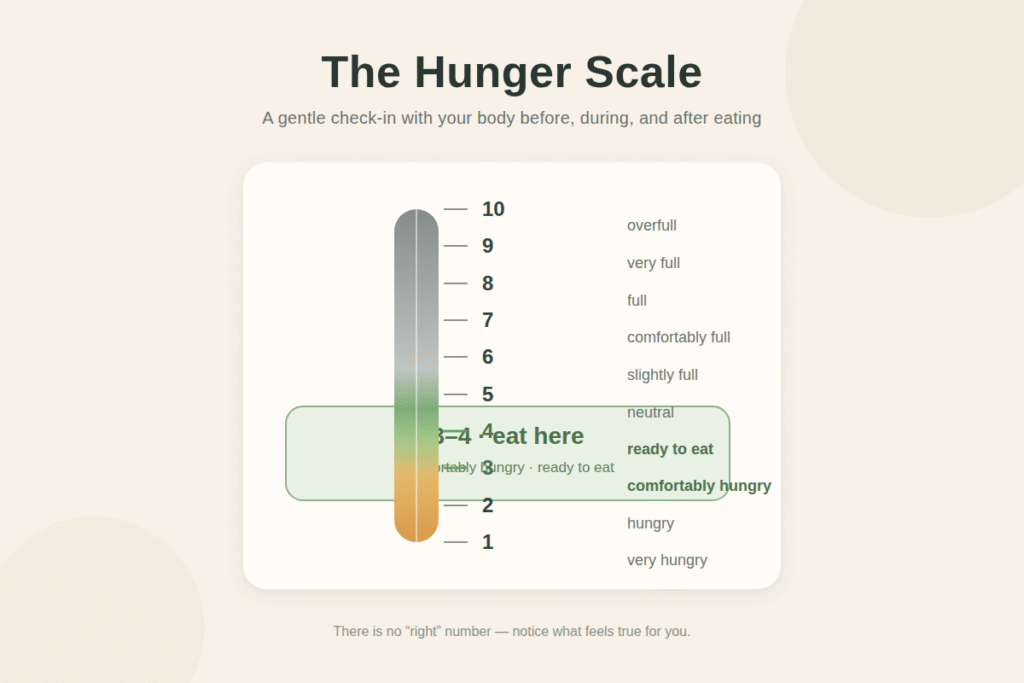
Before you eat anything in the evening, rate your hunger from one to ten.
| Rating | What it means |
|---|---|
| 1–2 | Properly empty, maybe slightly shaky. You left it too long. |
| 3–4 | Genuinely hungry. This is when you should be eating. |
| 5–6 | Could eat, could happily wait. Usually habit or boredom. |
| 7–8 | Not hungry — you’ve just seen or thought about food. |
| 9–10 | Full and still tempted. That’s emotional or habitual, not hunger. |
If you keep landing at 1–2 in the evening, the problem is daytime under-eating. Fix the day and the evenings mostly sort themselves out.
If you’re sitting at 5–8, it was never hunger, and more food won’t fix it. That’s habit, boredom or stress — which needs a behavioral answer, not a bigger dinner.
Getting this distinction right matters more than any tip below it, because the two problems have opposite fixes.
What Actually Works
If the cause is daytime under-eating
Eat something for breakfast, even a small one. Protein if possible. No appetite in the morning usually means the cycle has already set in — eating early is what breaks it, even when you don’t feel like it.
Front-load your protein. Get a proper portion in before dinner rather than saving it all for the evening.
Eat to a schedule for two weeks. Regular meal times recalibrate hunger signalling. A routine helps most when night-time overeating comes from not eating enough during the day — which, as we’ve established, is most cases.
If the cause is meal composition
Build meals around protein and fiber. Both slow digestion and hold off hunger far longer than refined carbs.
Plan your evening snack on purpose. Sounds like giving in. It isn’t. Planning a healthy snack about an hour after dinner reduces cravings later in the night — and it’s waiting until the hunger pangs arrive that leads to overeating.
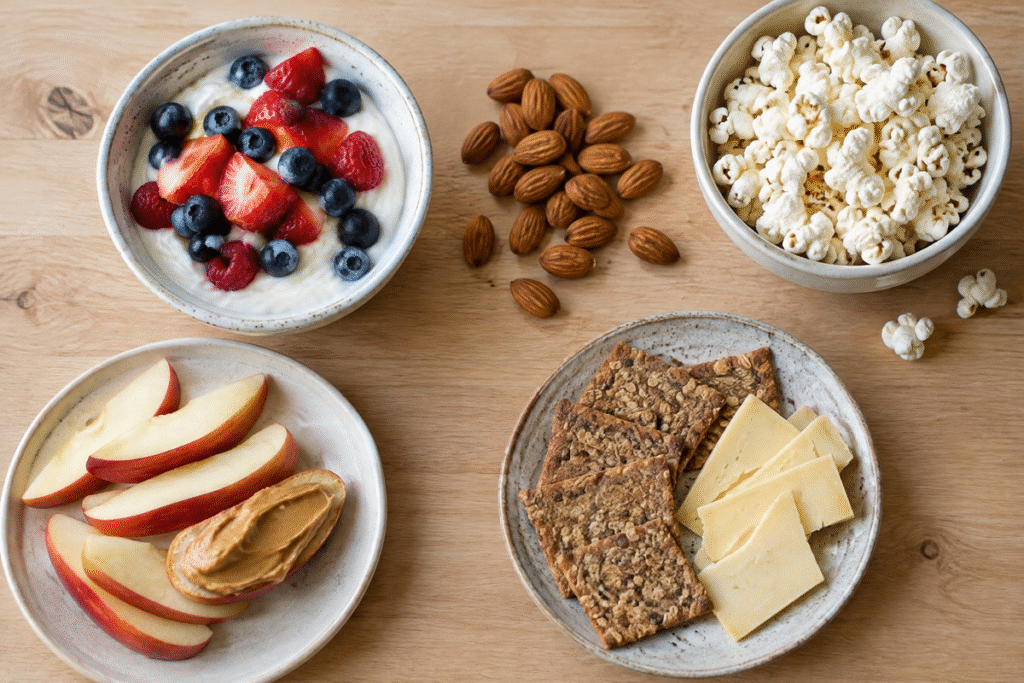
Good options:
- Greek yogurt with berries
- A small handful of nuts
- Air-popped popcorn
- Apple with peanut butter
- Wholegrain crackers with cheese
If the cause is hormonal or sleep-related
Guard your sleep schedule. Consistency counts as much as hours — the same bedtime most nights does more than the occasional lie-in.
Finish eating two to three hours before bed where practical. A meal takes roughly two to three hours to digest, and lying down when full can relax the stomach valve, making acid reflux more likely.
If late eating is unavoidable, go protein-heavy. The same meal eaten at 8pm has a significantly greater impact on blood sugar than it would earlier in the day. Prioritizing protein and easing off carbohydrates limits that spike.
If the cause is habit or boredom
Change the environment, not your resolve. Out of sight genuinely works — if one particular snack is your weakness, keep it out of the house rather than testing yourself against it every night.
Brush your teeth after dinner. Sounds trivial. Works annoyingly well. It signals to your brain that eating is done for the day, and food loses much of its appeal afterwards.
Give your hands something to do. When boredom has you circling the fridge, an evening activity you actually enjoy keeps your mind occupied — and often improves sleep too.
Try herbal tea. A hot drink takes a while to finish, which conveniently carries you past the moment the craving would have filled.
If the cause is stress
Name it before you eat. Just asking “am I hungry, or am I something else?” breaks the automatic loop often enough to be worth the ten seconds.
Build a real wind-down routine. A consistent evening routine tells your brain it’s time to relax, which makes night-time snacking less likely and supports better sleep.
Deal with the stress itself where you can. Food does give relief — nobody’s pretending otherwise. It’s just temporary, and the guilt that follows usually gets added to the original stress rather than subtracted from it.
The 10-Minute Rule
When a craving lands, run through this before acting on it:
- Drink a full glass of water.
- Set a timer for ten minutes.
- Do something with your hands.
Still want it when the timer goes? Then eat — deliberately, sitting down, on a plate. Real hunger waits. Boredom and habit usually don’t.
This isn’t about denial. It’s about telling the two apart, so you can answer each one properly.
When to Seek Proper Support
Most evening cravings are ordinary, and the steps above will handle them. But some patterns deserve professional input.
Night Eating Syndrome involves eating excessive amounts in the late evening and at night, typically with little or no appetite in the morning. Night-time eating is also linked to binge eating disorder, where large amounts are eaten in one sitting and it feels out of control.
If evening eating feels out of your control, comes with real distress or shame, or you’re waking during the night specifically to eat, speak to a GP or a registered dietitian. These are recognized, treatable conditions — not willpower failures, and not something to manage alone.
A Note on Supplements
Some people find appetite-support supplements useful as one piece of a bigger picture. Be clear about what they can and can’t do: they may take the edge off cravings, but they don’t touch the underlying cause. Under-eating during the day? No supplement on the shelf fixes that.
If you’re considering one, check three things before spending anything:
- The full ingredient list is published.
- Actual doses are shown, rather than hidden behind a “proprietary blend”.
- The brand is honest about working alongside diet and exercise, rather than instead of them.
Disclosure: I take PhenQ myself as part of my routine, and the link below is an affiliate link (#ad) — if you buy through it, I may earn a commission. I’d rather tell you that straight than have you find out some other way. It’s a support tool, nothing more, and everything above matters far more than anything below.
View PhenQ On the Official Site
The Short Version
Evening cravings are almost never a willpower problem. They’re a signal — that you under-ate during the day, that your meals are light on protein, that your sleep has slipped, or that something emotional needs attention.
Find the one that’s yours, deal with that cause specifically, and the evenings get easier. Not perfect. Easier.
Pick one change tonight. Eat a proper breakfast tomorrow. See what happens.