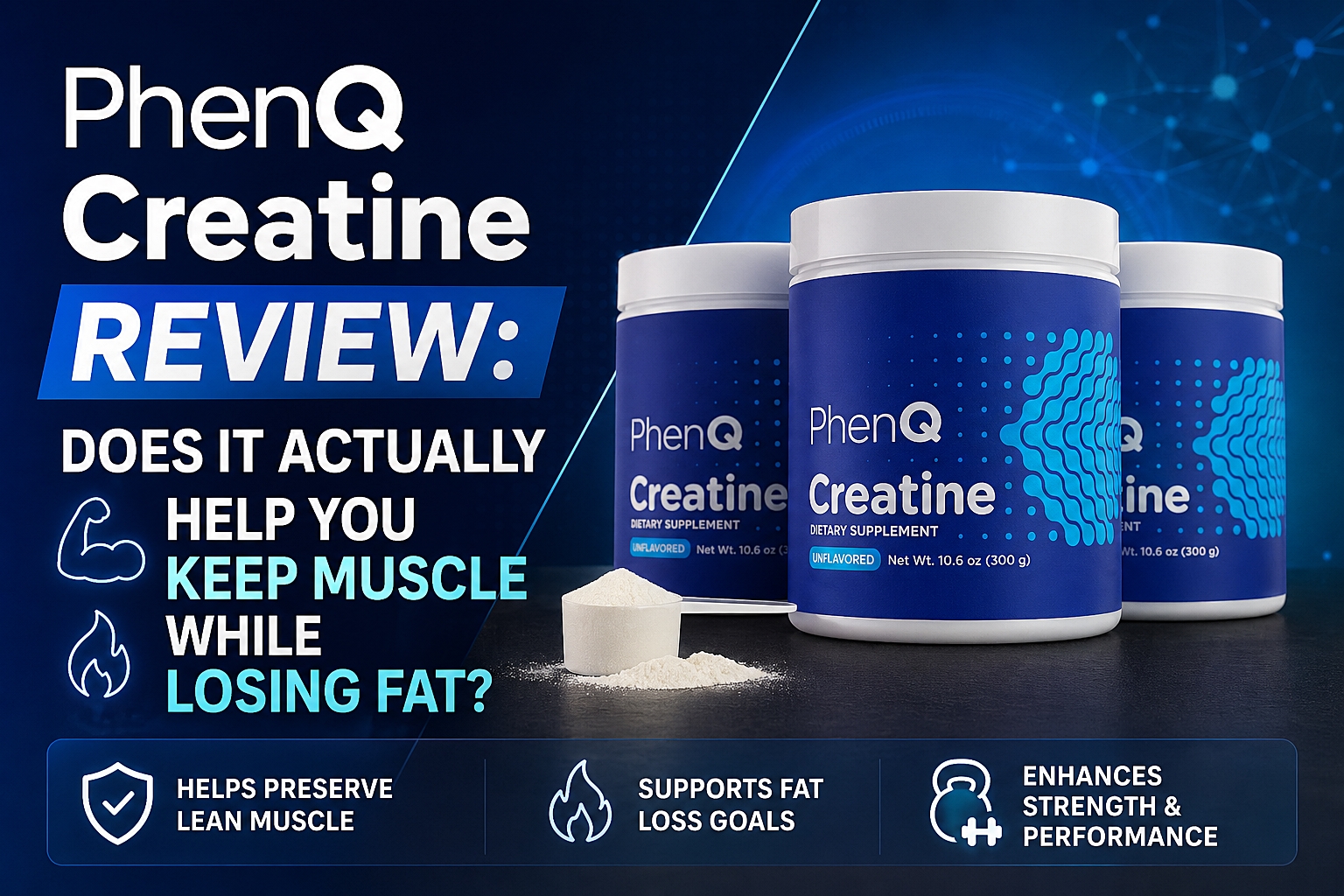
I started looking into PhenQ Creatine because I was losing weight but also losing the muscle I’d spent months building. That combo is gutting, honestly. You eat less, train hard, and step on the scale—the numbers go down, but so does the definition you worked for. That’s when a mate mentioned creatine, and I ended up on the PhenQ page.
So I dug in. Read the research, tried it for several weeks, and compared it against the cheap tubs I’d used before. Here’s my honest PhenQ Creatine review for anyone in the UK trying to hold onto muscle while cutting fat.
Quick Verdict
PhenQ Creatine is a clean, single-ingredient creatine monohydrate powder (5 g per serving, micronized, vegan, third-party tested) built for people who train while dieting. It won’t burn fat—it’s not a fat burner—but creatine monohydrate is the single most evidence-backed supplement for protecting strength and lean muscle, which is exactly what tends to slip during a calorie deficit. If you want a no-frills, certified creatine and don’t mind paying more than supermarket own-brand, it’s a solid pick. If you only care about price per gram, a basic creatine monohydrate does the same job for less.
What Is PhenQ Creatine?

PhenQ Creatine is a creatine monohydrate powder made by the same brand behind the well-known PhenQ fat burner. The two products are completely different things, though—this one isn’t a fat burner at all. What it does is help support your muscles when your body is running low on calories.
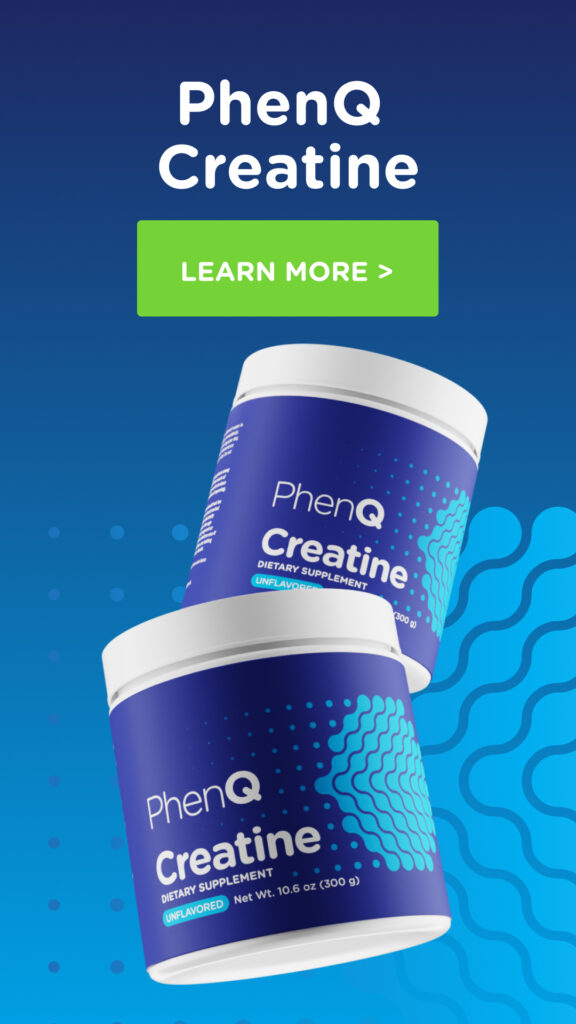
One ingredient. Creatine monohydrate. 5 grams per serving. Nothing else hiding in there—no artificial flavours, no fillers, zero calories. I appreciated that straight away, because I’ve bought supplements where you turn the tub around and the label reads like a chemistry exam.
The brand states it’s vegan, gluten-free, dairy-free, soy-free, GMP-certified, and third-party tested. For me, third-party tested is the one that matters most—it means an outside lab checked that the tub actually contains what the label says, which isn’t a given in the supplement world.
One honest note up front: it’s the ingredient—creatine monohydrate—that has the deep research behind it, not this specific branded tub. PhenQ Creatine’s value is in delivering that proven ingredient in a clean, certified form, not in any special formula you can’t get elsewhere.
Why Creatine Monohydrate Is Such a Big Deal
Here’s the bit most people skip—and probably shouldn’t.
Your muscles run on something called ATP. Think of it like the battery in your phone, except your muscles drain it in seconds during hard effort. Creatine is stored in your muscle cells as phosphocreatine, and its whole job is recharging that battery fast so you can keep going. Most people walking around have muscle creatine stores that aren’t fully topped up, and supplementing fixes that.
This isn’t a gym-bro claim. In its 2017 position stand, the International Society of Sports Nutrition (ISSN) concluded that creatine monohydrate is the most effective nutritional supplement available for increasing high-intensity exercise capacity and lean body mass during training. That review drew on hundreds of published studies, and it also reported that creatine is safe and well-tolerated in healthy people at recommended doses.
PhenQ’s version is micronized, which simply means the powder particles are smaller so it dissolves in water properly. Older creatine products used to settle at the bottom of the glass like sand. This one doesn’t.
The Real Problem PhenQ Creatine Solves: Keeping Muscle in a Deficit
Here’s what nobody tells you when you start a diet.
Cutting calories is simple in theory. In practice, your training takes a hit quickly. Sessions feel harder, lifts drop, recovery drags—and because you’re training less intensely, your body has less reason to hold onto the muscle you’ve got. You end up lighter but softer. Smaller, not leaner. That’s not the goal.
I went through this myself. I dropped about 8 pounds over six weeks and thought I’d look more defined. I looked flat instead—that deflated look you see on people who’ve lost weight but don’t look athletic.
This is where creatine earns its place during a cut. By keeping phosphocreatine levels topped up in your muscle cells, it helps you maintain training quality even when you’re eating less—and training quality is a big part of what tells your body to keep its muscle. The ISSN position stand specifically links creatine monohydrate to maintaining lean body mass during training, which is exactly the window where dieters tend to lose it. Creatine isn’t magic and it won’t replace adequate protein and resistance training, but it’s one of the few supplements with real evidence behind that role.
Will PhenQ Creatine Make You Bloated or Puffy?
This is the question I see women ask constantly, and it’s a fair one.
Short answer: no, not in the way people fear. When you first start creatine, your muscles pull water into the muscle cells—this is intramuscular hydration. The water goes inside the muscle, not under the skin. Most people actually look slightly more defined because of it, with muscles sitting firmer rather than flat.
The scale might tick up half a kilo or so in the first week or two. That’s water going into the muscle—it’s not fat. Once you understand that, it stops being scary. And because PhenQ Creatine is just creatine with no stimulants or fillers, there’s nothing in it that typically causes the gut bloating people worry about.
Is PhenQ Creatine Safe? Side Effects to Know
Creatine monohydrate is one of the most studied supplements there is, and the ISSN review found no evidence of harmful effects in healthy people taking recommended doses, even over long periods. For most people it’s very well tolerated.
The mild effects that can occur are usually down to dosing or hydration: minor stomach discomfort if you take a large amount on an empty stomach (which is one reason skipping the loading phase helps), and the small, temporary bump in scale weight from water retention mentioned above. Drinking enough water through the day sorts most of it.
That said, this is general information, not medical advice. If you have a kidney condition, are pregnant or breastfeeding, are under 18, or take regular medication, check with your GP or pharmacist before starting any new supplement.
How I Take It — Dosage and Timing
Five grams a day. One scoop in water. That’s the whole protocol.
I take mine after training, mixed into a post-workout shake or just plain water on rest days. It mixes fine—no grittiness, no weird taste.
You don’t need to load. Some people do a loading phase (around 20 g a day split into doses for the first week) to saturate the muscles faster. It works, but you reach the same place by taking 5 g daily for three to four weeks, with less chance of any stomach sensitivity. The ISSN notes both approaches get you to full stores; loading just gets you there quicker.
The biggest thing I’d stress: don’t skip days. Creatine builds up in your muscle stores over time, so consistency is the whole game. Missing days drops your stores back down and dulls the effect. Because it’s stimulant-free, the timing genuinely doesn’t matter much—take it whenever fits your routine, with no sleep issues or jitters.
How Long Does PhenQ Creatine Take to Work?
This isn’t a pre-workout—you won’t feel it the same day. Taking 5 g daily, muscle creatine stores fill up over roughly three to four weeks (faster if you load). For me, week one felt like nothing, but by week three the workouts felt noticeably different—less like running on empty. Most brand feedback echoes the two-to-three-month mark for the clearest difference in training and muscle tone, which is also why the multi-month bundles exist.
For more on realistic timelines across the PhenQ range, see our guide on how long PhenQ takes to work.
PhenQ Creatine vs. the Original PhenQ Pill—What’s the Difference?
People mix these up constantly, so here’s the clear version.
| Original PhenQ Pill | PhenQ Creatine | |
|---|---|---|
| What it is | Multi-ingredient fat burner | Single-ingredient creatine powder |
| Main job | Fat loss, appetite, energy, mood | Muscle energy & lean mass support |
| Stimulants | Yes (caffeine) | None |
| Burns fat? | Aims to support fat loss | No |
| Best for | Driving the cut | Protecting muscle during the cut |
The original PhenQ pill is a stimulant-based fat burner built around ingredients like α-Lacys Reset, Capsimax, caffeine anhydrous, chromium picolinate, nopal cactus, and L-carnitine fumarate, marketed to work across several weight-loss pathways. PhenQ Creatine has no crossover with it—no stimulants, no fat-burning action, no appetite suppression. It’s purely about muscle energy and protecting lean mass.
The two can run alongside each other without conflict. For someone cutting, that’s arguably the smartest setup: the original PhenQ drives fat loss while PhenQ Creatine protects the muscle underneath.
PhenQ Creatine Price & Where to Buy in the UK
PhenQ Creatine is sold through the official website rather than supermarkets, which keeps it away from counterfeits but means you won’t find it on the high street. It comes in three bundle sizes, and the per-tub price drops the more you buy—standard for a supplement you’re meant to take daily for months.
- 1-month supply — entry option, around £18.99 at the time of writing
- 2-month supply — better value per tub (the brand’s most popular)
- 3-month supply — lowest cost per serving
Every order is covered by a 60-day money-back guarantee, and UK delivery is free over the site’s threshold. Prices and promotions change regularly, so check the official store for the current deal before you buy.
Is it the cheapest creatine? No—plain creatine monohydrate is cheaper gram-for-gram. What you’re paying extra for is the third-party testing, GMP certification, the micronized clean formula, and the guarantee. If purity and testing matter to you, that premium is reasonable. If you only care about cost, a basic tub does the same chemical job.
What Other People Say About PhenQ Creatine
I read through a good chunk of user reviews on this one, and a few themes come up again and again.
The most common is that workouts feel noticeably better during a cut—the flat, grinding feeling that creeps in after a few weeks of dieting eases off, with more reps and less of the “I’ve got nothing left” wall mid-session. A lot of women mention they expected to look bloated and were surprised by the opposite: fuller, tighter-looking muscles, more definition rather than less.
The simplicity gets praised repeatedly—people like knowing exactly what’s in the tub, with no proprietary blends hiding cheap filler doses. And mixability gets consistent thumbs-up: it dissolves properly in cold water, which sounds basic until you’ve used a creatine that doesn’t.
PhenQ Creatine: Quick Breakdown
| Formula | 100% micronized creatine monohydrate |
| Daily dose | 5 g (one scoop) |
| Calories | Zero |
| Extras / fillers | None |
| Stimulants | None |
| Certifications | GMP-certified, third-party tested |
| Dietary | Vegan, gluten-free, soy-free, dairy-free |
| Best for | Lean muscle support during a calorie deficit |
| Guarantee | 60-day money-back |
My Overall Take on PhenQ Creatine
If you’re cutting and you train—even just a few times a week—PhenQ Creatine is genuinely worth adding in. Not because it burns fat; it doesn’t. But because losing fat while keeping muscle is much harder without creatine, and the science behind creatine monohydrate is about as solid as sports nutrition gets.
I noticed a difference—not in week one, but by week three the workouts felt different. Less like running on empty, more like I had something to give again. The mirror told a better story than the scale alone.
It’s one ingredient, it’s clean, and it’s well made. The only real catch is price: you can get the same active ingredient cheaper if certification and testing aren’t priorities for you. For everyone else, it solves a real problem most fat-loss supplements don’t even acknowledge.
PhenQ Creatine FAQ
Does PhenQ Creatine burn fat?
No. It’s not a fat burner and contains no stimulants. Its job is to support muscle energy and help protect lean muscle while you diet. For fat loss, the brand’s original PhenQ pill is the relevant product.
Does PhenQ Creatine contain caffeine?
No. It’s completely stimulant-free, so it won’t affect sleep or cause jitters, and you can take it at any time of day.
Will PhenQ Creatine make me look bloated?
Generally no. Creatine draws water into the muscle, not under the skin, so most people look slightly firmer rather than puffier. A small, temporary rise on the scale in the first week or two is water, not fat.
How much PhenQ Creatine should I take?
5 g once a day, every day. Loading isn’t necessary; daily 5 g fills your muscle stores in three to four weeks. Consistency matters more than timing.
Is PhenQ Creatine suitable for women?
Yes. Creatine works the same way in women as in men and is widely used by women to protect muscle tone and training quality during a calorie deficit.
Where can I buy PhenQ Creatine in the UK?
Through the official PhenQ website, which ships across the UK and is backed by a 60-day money-back guarantee. Buying direct avoids counterfeit products from unknown third-party sellers.
Disclaimer: This article is for general information only and is not medical advice. Statements about dietary supplements have not been evaluated by a medicines regulator, and this product is not intended to diagnose, treat, cure, or prevent any disease. Always speak to your GP or pharmacist before starting a new supplement, especially if you are pregnant, breastfeeding, under 18, have a health condition, or take medication. This page may contain affiliate links, and we may earn a commission if you buy through them at no extra cost to you.
Source
Kreider RB, et al. International Society of Sports Nutrition position stand: safety and efficacy of creatine supplementation in exercise, sport, and medicine. Journal of the International Society of Sports Nutrition, 2017.